
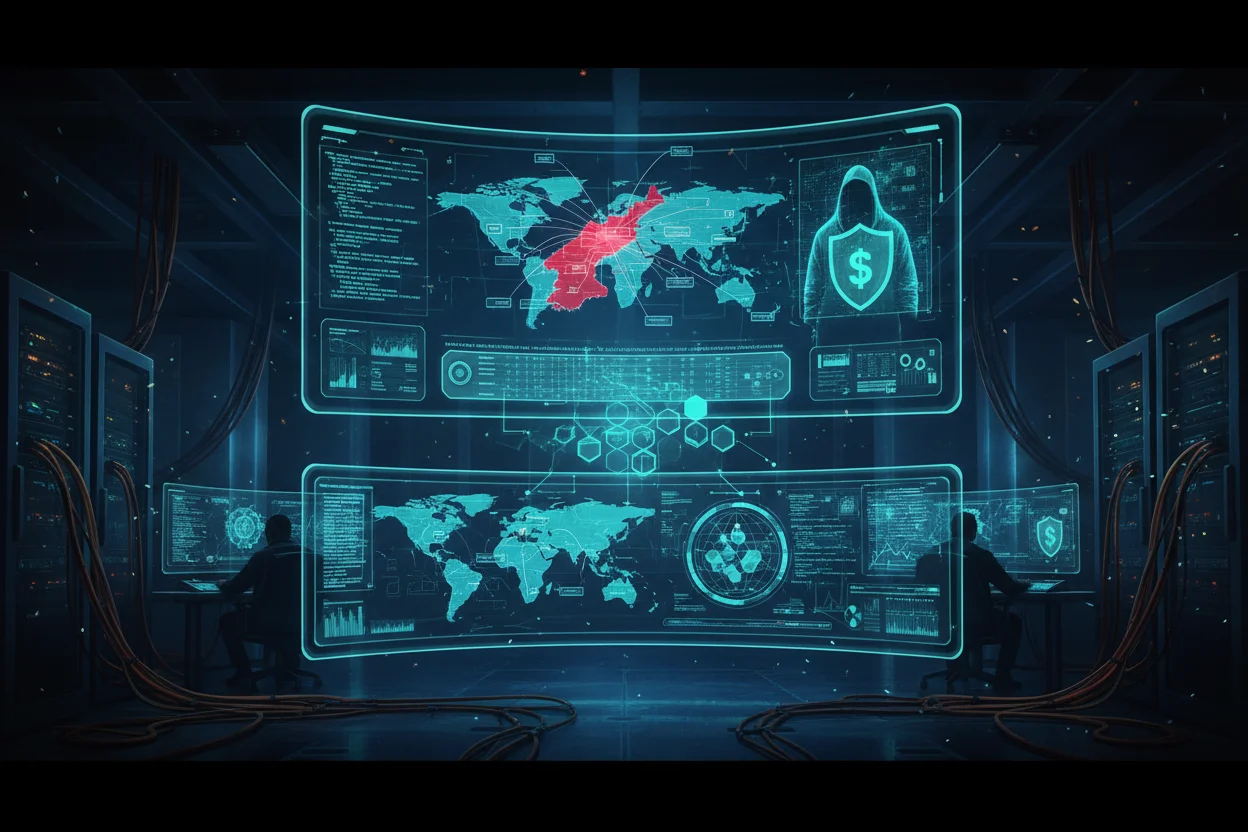
The dynamic world of cryptocurrency has long been a magnet for both innovation and illicit activities. One of the most significant incidents to recently capture the industry's attention is the exploitation of the Drift Protocol, a decentralized perpetual futures exchange on the Solana blockchain. This incident, which resulted in a loss of $286 million, is suspected to be linked to the Democratic People's Republic of Korea (DPRK), a nation infamous for its cybercriminal activities aimed at funding state programs.
On April 1, 2026, Drift Protocol suffered a severe security breach that not only exposed vulnerabilities inherent in decentralized finance (DeFi) systems but also underscored the persistent threat posed by state-sponsored actors in the digital asset space. The sophistication and precision of the attack highlight the urgent need for robust compliance measures and advanced security protocols to protect against such threats.
Understanding the Drift Protocol Exploit
The exploit of Drift Protocol unfolded with remarkable precision and speed. Within just an hour, the attackers managed to drain the majority of the platform’s liquidity by targeting its protocol vaults. According to blockchain security firm PeckShield, the breach was facilitated by a compromise of the protocol's administrative private keys, granting attackers privileged access to withdraw assets and alter controls.
Targeted Vaults and Asset Drainage
The attackers focused on three core vaults: the JLP Delta Neutral, SOL Super Staking, and BTC Super Staking vaults. The most significant transfer involved approximately 41.7 million JLP tokens, valued at around $155 million at the time. Additionally, assets such as USDC, SOL, cbBTC, and wBTC were stolen, resulting in a drastic reduction of Drift’s total value locked (TVL) from approximately $550 million to under $250 million. This incident marks the largest DeFi hack of 2026 and the second-largest in the Solana ecosystem after the $326 million Wormhole bridge exploit in 2022.
This breach not only highlights the vulnerabilities within DeFi platforms but also demonstrates the critical need for enhanced security measures to prevent future occurrences.
Tracing the Movement of Stolen Funds
In the wake of the exploit, tracking the movement of stolen funds became a top priority for investigators. On-chain data revealed that the attacker's wallet was created roughly eight days prior to the breach and received a small test transfer from a Drift vault. This suggests that the operation was meticulously planned and executed with precision.
Cross-Chain Laundering Techniques
Post-exploit, the attackers predominantly employed a Solana-based decentralized exchange (DEX) aggregator to rapidly convert stolen tokens into USDC. These funds were subsequently bridged to the Ethereum blockchain, where they were converted into ETH. This use of cross-chain techniques not only complicates the tracing of illicit funds but also demonstrates the sophisticated methods employed by cybercriminals to obfuscate their tracks and evade detection.
Indicators of DPRK Involvement
Elliptic, a blockchain analysis firm, identified several indicators linking the exploit to DPRK. The on-chain behavior, laundering methodologies, and network-level indicators are consistent with techniques observed in previous operations attributed to North Korean actors. The attack on Drift Protocol is believed to be orchestrated by the same group responsible for the October 2024 Radiant Capital hack, further reinforcing the connection to DPRK.
Historical Context and Patterns
DPRK's involvement in crypto-related cybercrimes dates back several years, with estimates suggesting that North Korean actors have stolen over $6.5 billion in crypto assets. These operations are often linked to the funding of the nation's weapons programs, as highlighted by the US government. The consistent pattern of sophisticated cyberattacks demonstrates the significance of North Korea's cyber capabilities and their impact on global financial security.
Implications for Compliance and Regulation
The Drift Protocol exploit underscores the critical role of compliance and regulatory frameworks in safeguarding the crypto ecosystem. As state-sponsored actors continue to target crypto assets, regulators and industry stakeholders must collaborate to enhance security measures and develop effective strategies for risk mitigation.
Enhancing Compliance Measures
Financial institutions and crypto service providers must implement stringent Know Your Customer (KYC) and Anti-Money Laundering (AML) protocols to identify and mitigate potential risks. Advanced blockchain analytics solutions, such as those offered by Elliptic, play a crucial role in tracing illicit activities and ensuring compliance with regulatory requirements.
Moreover, regulatory bodies must work towards establishing comprehensive frameworks that address the unique challenges posed by decentralized finance. This includes fostering international cooperation and information sharing to combat cross-border cyber threats effectively.
Real-World Cases and Compliance Challenges
The Drift Protocol exploit is not an isolated incident. Similar cases of crypto-related cybercrime have been reported globally, highlighting the persistent challenges faced by compliance teams in identifying and mitigating such threats.
The Radiant Capital Hack
In October 2024, Radiant Capital, another DeFi platform, fell victim to a hack attributed to the same DPRK-linked group responsible for the Drift Protocol exploit. The attackers employed similar techniques to siphon off assets, underscoring the need for continuous monitoring and adaptation of security protocols.
Supply Chain Compromise: The Axios npm Package
Another notable example is the supply chain compromise of the Axios npm package, which was attributed to a DPRK threat actor known as UNC1069. This incident highlights the diverse tactics employed by state-sponsored actors, from direct platform exploits to compromising software supply chains.
The Role of Blockchain Forensics in Crime Prevention
Blockchain forensics is an essential tool in the fight against crypto-related cybercrime. By analyzing on-chain data, compliance teams can trace the movement of illicit funds, identify patterns of behavior, and link criminal activities to known threat actors.
Advanced Clustering Techniques
Elliptic's Advanced Clustering for Solana, for instance, automatically links main accounts with all associated token accounts, providing complete entity visibility. This enables compliance teams to screen addresses controlled by attackers and gain insights into related addresses, thereby enhancing risk intelligence and exposure detection.
Cross-Chain Analysis
Cross-chain analysis capabilities are vital in tracing funds as they move across different blockchains. By maintaining comprehensive blockchain coverage, analytics providers can ensure that laundering techniques, such as those observed in the Drift Protocol case, remain fully traceable. This facilitates timely detection and intervention, reducing the risk of further asset dissipation.
Practical Implications for Compliance Teams
The Drift Protocol exploit serves as a wake-up call for compliance teams tasked with safeguarding the crypto ecosystem. The following insights can help enhance their preparedness and response to similar incidents:
- Adopt robust KYC and AML protocols to identify and manage risks effectively.
- Leverage advanced blockchain analytics solutions to trace illicit activities across multiple blockchains.
- Collaborate with regulatory bodies, industry stakeholders, and international partners to foster information sharing and coordinated responses to cyber threats.
- Continuously monitor evolving threat landscapes and adapt security measures to counter emerging tactics employed by cybercriminals.
As the crypto industry continues to grow and evolve, the importance of compliance and security cannot be overstated. By implementing comprehensive strategies and leveraging advanced technologies, compliance teams can play a pivotal role in protecting the integrity of the crypto ecosystem.